
Getting a credit card in Japan as a foreigner is genuinely difficult — more difficult than most guides admit. The barrier isn't your salary. Japanese credit card issuers screen for stability and local establishment, and most new foreign residents fail that test simply because they haven't lived here long enough. This guide covers the exact approval requirements for foreigners in 2026, which cards to apply for first, what documents you need, and the one timing mistake that kills most first-year applications.
Japanese credit screening operates under the Installment Sales Act (割賦販売法 / Kappu Hanbai Hō) and rewards stable local presence over salary level. A foreign resident earning ¥6,000,000 a year who arrived three months ago is more likely to be rejected than someone earning ¥3,500,000 who has been registered at the same address for a year.
What Are Japan Credit Card Foreigners Approval Requirements?
How Japanese Credit Card Screening Works for Expats
Japanese credit card issuers don't use a simple income threshold. They run applicants through a credit bureau check and score them on a set of stability signals — registered address, length of residence at that address, employment continuity, active domestic bank account, and active Japanese mobile phone contract. Each factor contributes to a picture of "will this person still be in Japan in two years?"
Foreigners start at a disadvantage because Japanese credit bureaus — primarily JICC (日本信用情報機構) and CIC (シー・アイ・シー) — hold no history on them. No history isn't the same as bad history, but it does mean the issuer has nothing to offset any red flags on the application. One missing piece — no domestic bank account, a mobile plan registered in someone else's name, a recently moved address — is usually enough to trigger a rejection.
The screening process itself is not manual. Most decisions are automated, and the system cannot call you to clarify details. If your residence card shows a different romanization of your name than your bank account, the system may flag the inconsistency without explanation. You'll receive a rejection notice and no further information about why.
Why Stability Matters More Than Salary in Approval Decisions
Japanese card issuers are not primarily concerned with how much you earn. They are concerned with continuity. A specialist engineer on a 5-year visa who has been at the same address for 18 months, has the same employer for 18 months, and has a stable bank account looks excellent on paper. A consultant earning double that amount but switching jobs, recently moved, and newly arrived looks risky — regardless of income.
The practical implication: don't try to compensate for missing stability criteria by applying to premium cards with higher stated income thresholds. That strategy consistently backfires. Build the stability profile first, then apply.
Who Qualifies? Essential Documents and Eligibility Checklist for Foreign Applicants
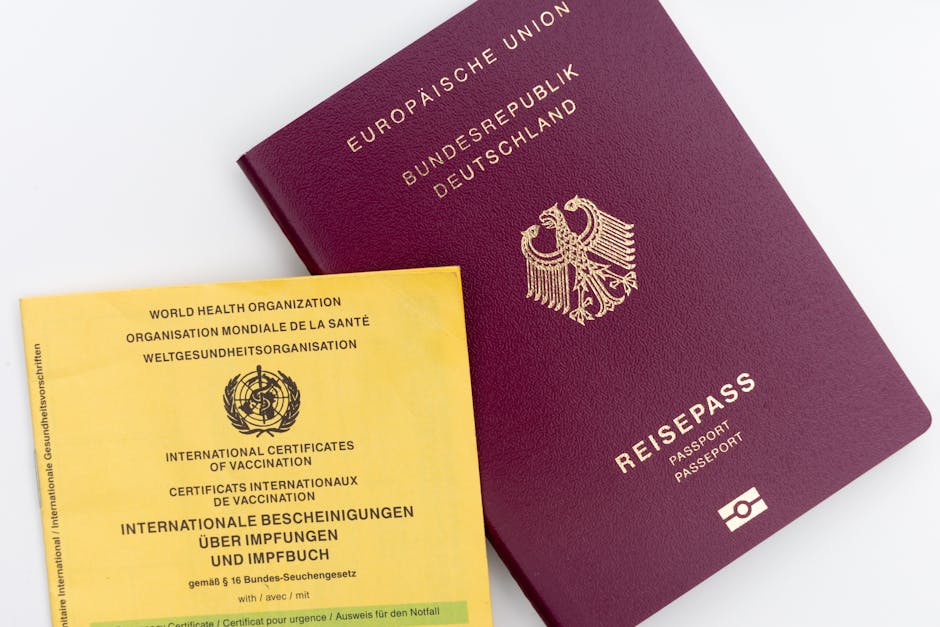
Mandatory Requirements: Residence Card, Address, Bank Account, and Mobile Phone
There are four non-negotiable requirements every foreign applicant needs before submitting any credit card application in Japan:
- Residence Card (在留カード / Zairyu Kādo) — Must be valid and show sufficient remaining validity. A card expiring in three months will almost certainly cause rejection. Most issuers want at least 6 months of remaining validity, and some want more than a year.
- Registered Japanese address — Your address must be formally registered at your local ward or city office (住民登録 / Jūmin Tōroku). The address on your application must match the address on your residence card exactly.
- Domestic Japanese bank account — A Japanese bank account in your name, used for the card's direct debit. Japan Post Bank (ゆうちょ銀行) or AEON Bank are the most accessible options if you haven't set one up yet.
- Japanese mobile phone contract — A standard SIM contract (not a prepaid SIM) registered in your name. MVNO contracts from providers like IIJmio count. Tourist SIMs and SIMs in another person's name do not.
Every piece of identification you submit — residence card, bank details, phone contract, address — must show consistent personal information. Name romanizations that differ between documents are a common rejection trigger.
Visa Types That Qualify for Credit Card Approval in Japan
You need a long-term residence status. Short-term visitor visas (観光ビザ) do not qualify — full stop. Visa-exempt entries don't qualify either.
Visa categories that do qualify include:
- Engineer / Specialist in Humanities / International Services (技術・人文知識・国際業務)
- Highly Skilled Professional (高度専門職)
- Permanent Resident (永住者)
- Spouse or Child of Japanese National (日本人の配偶者等)
- Long-Term Resident (定住者)
- Designated Activities (特定活動) — depends on the specific activity
- Student (留学) — approved by some issuers, rejected by others; income requirements are a barrier
Working Holiday visa holders have a harder time because the visa itself signals short-term presence. Some applicants on Working Holiday have succeeded with GTN-Epos specifically, but this should be treated as an exception rather than a reliable pathway.
Why Permanent Residency Is Not Required (But What Status Actually Matters)
Permanent residency (永住者) is the easiest status for credit card approval because it has no expiry date on the visa itself. But it is not required. Foreigners on work visas — particularly Engineer / Specialist visas — have confirmed approvals with Rakuten Card, Epos Card, and Sumitomo Bank cards.
What actually matters is the remaining validity on your current visa period and whether your residence card reflects stable, long-term presence. A 5-year Engineer visa with 4 years remaining looks much better than a 1-year visa recently renewed, even if both grant the same rights on paper.
The 90-Day Local Establishment Trap: Why Timing Kills Most First-Year Applications

The Hidden Screening Window and Why Banks Flag New Arrivals
The single most common reason foreign residents get rejected is applying too early. Most issuers use the length of your registered address history as a proxy for local stability. If you registered your address two months ago, you look like a flight risk — even if your visa has years of validity remaining.
There is no officially published waiting period. No issuer will tell you "wait 90 days." But the pattern is clear: applicants with 3-6 months of consistent local documentation succeed at a significantly higher rate than those applying within the first month of arrival. For your first application, waiting until you have at least 3 months at the same registered address is the minimum. Six months is safer.
What Happens If You Apply Too Early: Bureau Reporting and Soft Denials
Rejected applications are recorded by credit bureaus. This matters. Multiple rejections in a short period look worse than one rejection, because multiple inquiries with no approved account signals that issuers are finding problems. The bureau record itself becomes a new obstacle.
If you're rejected, wait at least 3-6 months before trying again — and use that time to address whatever was missing. Don't shotgun applications across multiple issuers simultaneously. Pick one, wait for the result, then move on.
How to Document Your Local Presence Before Submitting Your Application
Before you apply, make sure these things have been true for at least 3 months and are consistent:
- Same registered address on your residence card and ward office registration
- Bank account open and active (at least a few transactions, not just opened)
- Japanese mobile phone contract in your name, same address used for billing
- Employer details consistent (same company name, same address)
If you've moved recently, wait. Updating your address and then immediately applying flags the instability the screeners are looking for.
I haven't applied for a credit card here myself, but from what I've heard consistently: without permanent residency — including those on a spouse visa who aren't PR — most Japanese cards won't go through. If you're unsure where you stand, ask a bank branch directly rather than relying on websites.
Step-by-Step Process: How to Apply for a Credit Card as a Foreigner in Japan

Gathering Your Documents and Preparing Your Japanese Bank Account
Before you open any application form, pull together the following and check they're consistent across every document:
- Residence Card — check the expiry date and romanized name
- Residence certificate (住民票 / Jūminhyō) — obtainable from your ward office, costs ¥200-¥300, shows your official registered address
- Japanese bank account passbook or account details — name must match residence card exactly
- Japanese mobile phone contract confirmation — must show your name and address
- My Number (マイナンバー) — some issuers now request this at application; having your My Number Card (マイナンバーカード) speeds things up
If your bank account was opened with a slightly different romanization of your name than your residence card shows, fix this before applying. Contact your bank branch directly.
Choosing the Right Card and Submitting Your Application
For a first-time applicant with no Japanese credit history, the strategic order is:
- Rakuten Card (楽天カード) — Apply here first. ¥0 annual fee, online application, widely reported as the most accessible entry-level card for foreign residents when all four eligibility criteria are met. Requires a Rakuten account linked to your Japanese details.
- Epos Card / GTN-Epos (エポスカード) — If Rakuten rejects you, try this second. GTN-Epos is specifically designed for foreign residents and offers support in English. Also ¥0 standard annual fee.
- Secured/deposit card — If both of the above reject you, apply for a bank-backed secured card. These require a deposit (typically ¥50,000-¥100,000) but have no credit screening. After 5-6 months of on-time payments, you have a payment record and can reapply for standard unsecured cards.
Submit one application at a time. Fill out the online form carefully — Japanese forms often have no field for middle names, so leave it blank rather than cramming it into the surname or given name field.
What to Expect During the Approval Timeline and Follow-Up Steps
Most online applications give an initial automated decision within a few minutes to a few hours. This is not the final answer for all cases — some applications are flagged for manual review, which can take 1-2 weeks.
If approved, the physical card arrives by post in approximately 1-2 weeks. You'll receive a PIN separately. After receiving the card, register it to your online account immediately and set up auto-pay for the full balance monthly — this is the fastest way to build a positive credit record in Japan.
Comparing Your Options: Banks, Cards, and Visa Types

Credit Card Providers Most Lenient with Foreigner Approval
Rakuten Card (楽天カード)
The most consistently recommended first card for foreign residents in Japan with no Japanese credit history.
Open to foreign nationals on long-term visas with a valid residence card, registered Japanese address, Japanese bank account, and Japanese mobile contract.
Annual fee: ¥0. Credit limit starts low — typically ¥100,000-¥300,000 for first-time applicants.
Pros: entirely online application, English-language support available via the app, widely accepted Visa and Mastercard versions. Con: if your Rakuten account details don't perfectly match your residence card, the system will reject you automatically with no explanation.
Epos Card / GTN-Epos (エポスカード / GTNエポスカード)
GTN-Epos is a version of the Epos Card specifically created for foreign residents in Japan, offered through Global Trust Networks.
Accepts foreign nationals on most long-term visa categories including some Working Holiday holders. GTN provides multilingual application support.
Annual fee: ¥0 (standard Epos Card). GTN-Epos may have an associated GTN service fee depending on which package you use.
Pros: designed specifically for foreign residents, English support, can be applied for even with limited Japanese language ability. Con: the standard Epos Card (non-GTN version) requires walking into a Marui department store for same-day issuance, which not everyone finds convenient.
Sumitomo Mitsui Card (三井住友カード)
A more conventional bank-backed credit card that some Engineer/Specialist visa holders have reported success with after establishing local credit history.
Best suited for applicants who already have a Sumitomo Mitsui bank account and at least 1 year of local establishment.
Annual fee: ¥0 for the NL (no-limit number) version.
Pros: strong card acceptance across Japan, reliable customer service. Con: less foreigner-friendly on the application process — entirely in Japanese, and approval rates for first-year foreign residents are lower than Rakuten or GTN-Epos.
Secured/Deposit Cards
If unsecured cards reject you, some banks offer credit cards backed by a cash deposit you hold with the bank.
Available to almost all foreign nationals with a valid residence card — no credit screening required.
Deposit requirement: typically ¥50,000-¥100,000. Annual fee varies by issuer — budget ¥1,000-¥2,000/year.
Pros: near-certain approval, builds Japanese credit history with every on-time payment. Con: your cash is locked up as collateral, and the card does not graduate automatically — you must apply separately for an unsecured card after building your record.
How Visa Status, Income Requirements, and Processing Times Differ by Issuer
| Card | Annual Fee | Foreign Resident Friendly | Minimum Visa Status | Approval Timeline | English Support |
|---|---|---|---|---|---|
| Rakuten Card | ¥0 | High | Long-term residence visa | Minutes–1 week | App only |
| GTN-Epos Card | ¥0 (card) | Very High | Long-term / some WHV | Minutes–2 weeks | Yes (multilingual) |
| Epos Card (standard) | ¥0 | Medium-High | Long-term residence visa | Same day (in-store) | Limited |
| Sumitomo Mitsui NL | ¥0 | Medium | Long-term / PR preferred | 1–2 weeks | No |
| Secured/Deposit Card | ¥1,000–¥2,000 | Very High | Any long-term residence | 1–2 weeks | Varies |
Common Questions
Can foreigners get a credit card in Japan in their first year?
Yes, but it requires having all four eligibility criteria in place — valid residence card, registered address, Japanese bank account, and Japanese mobile contract — and waiting at least 3-6 months after establishing those. Applying within the first 60 days of arrival almost always results in rejection. Rakuten Card and GTN-Epos are the most realistic options for first-year applicants.
What documents do foreigners need to apply for a Japanese credit card?
You'll need your Residence Card (在留カード), proof of your registered Japanese address, a Japanese bank account in your name, and a Japanese mobile phone contract (not prepaid) in your name. Some issuers will also ask for your My Number (マイナンバー) during the application. All personal details must be consistent across every document you submit.
Do you need permanent residency to get a credit card in Japan?
No. Permanent residency makes approval easier because the visa has no expiry date, but it is not required. Foreign nationals on Engineer/Specialist visa categories, Spouse of Japanese National status, and Long-Term Resident status have all confirmed approvals with Rakuten Card and Epos Card. What matters is sufficient remaining visa validity and a stable local footprint.
What visa types qualify for credit card approval in Japan?
Any long-term residence status qualifies in principle. Engineer / Specialist in Humanities / International Services (技術・人文知識・国際業務), Highly Skilled Professional (高度専門職), Permanent Resident (永住者), Spouse of Japanese National (日本人の配偶者等), Long-Term Resident (定住者), and Designated Activities (特定活動) are all eligible. Student visa holders can apply but face additional income hurdles. Tourist visas and short-term stays do not qualify.
How long does credit card approval take for foreigners in Japan?
Rakuten Card and Epos Card give initial automated decisions within minutes to a few hours for straightforward applications. Cases flagged for manual review take 1-2 weeks. After approval, the physical card arrives by post within approximately 1-2 weeks. The full process from application to card in hand is typically 1-3 weeks.
Can you get a credit card in Japan without a Japanese bank account?
No, not from a standard Japanese issuer. Japanese credit cards require a domestic bank account for direct debit repayment. If you don't yet have a Japanese bank account, open one first — Japan Post Bank (ゆうちょ銀行) is the most accessible option for new foreign residents and accepts applicants with just a residence card. AEON Bank is another option.
What if you have no credit history in Japan — can you still get approved?
Yes. No Japanese credit history is not the same as bad credit history. The bureaus simply see a blank file. Some issuers — especially Rakuten Card and GTN-Epos — approve applicants with no local credit history if all four eligibility criteria are met and the applicant has established at least a few months of local presence. Alternatively, a secured/deposit card bypasses this entirely and lets you build a payment record over 5-6 months.
Which Japanese credit cards are easiest for foreigners to get approved?
Rakuten Card is the most commonly cited first approval for foreign residents with no Japanese credit history. GTN-Epos is the most foreigner-accommodating in terms of language support and eligibility flexibility. The standard Epos Card (applied for in-store at Marui) is also accessible. Secured/deposit cards have the highest approval rate of all options, as they require no credit screening, but they tie up a cash deposit.
Do foreign credit cards work in Japan for online purchases?
Most international Visa and Mastercard credit cards work for online purchases on Japanese websites. American Express works on some sites. However, some Japanese e-commerce platforms and domestic subscription services only accept cards with a Japanese billing address. This is a separate issue from card acceptance in physical stores, where foreign cards are increasingly accepted at major retailers and convenience stores.
How does the My Number card affect foreigner credit card applications?
Having a My Number Card (マイナンバーカード) doesn't directly improve your credit score, but some issuers now request your My Number during the application for identity verification purposes. Providing it speeds up processing and reduces the chance of a manual review delay. Not having the physical card is not a disqualifier — you can provide your My Number as a number alone. The card does not replace the residence card requirement.
Bottom Line
Your Approval Timeline and Next Steps as a Japan Expat
If you have a valid residence card, a registered address, a Japanese bank account, and a Japanese mobile contract — and you've had those in place for at least 3-6 months — apply to Rakuten Card first. If that's rejected, try GTN-Epos. If both reject you, open a secured/deposit card, pay it on time for 5-6 months, then try again. Don't apply to multiple issuers at once, and don't let the word "stability" confuse you — it means consistent, documented local presence, not a high salary.
Information accurate as of 2026. Requirements and fees change — verify current details with official sources before taking action.
Sources
- Japan Credit Cards for Foreigners: How to Get Approved - Migaku
- Credit Cards in Japan for Foreigners: Which to Apply for First — Hello World Japan
- Best Japan Credit Cards for Foreigners (2026 Approval Guide)
- Top 6 credit cards in Japan for foreigners: guide 2026 - Expatica
- Best Credit Cards in Japan for Foreign Residents 2026 – VisaSHOGUN
Post a Comment