
Japan permanent residency requirements changed significantly in 2026, and several of those changes apply immediately to anyone planning to apply this year or next. The Immigration Services Agency (ISA) introduced new rules in February 2026 covering language testing, tax compliance enforcement, visa category eligibility, and a fee increase that pushes application costs above ¥100,000. If you're planning to apply under Article 22 of the Immigration Control Act, this guide covers what actually changed, what the income thresholds are, and how the process works from first document to approval.
Permanent residency (永住許可 / Eijuu Kyoka) is a change of status, not an extension of your current visa. Approval grants you indefinite stay in Japan under a new residence status — your current visa category is replaced entirely. You're not renewing a work visa or a spouse visa; you're applying for a different legal status that has no expiration date.
What Is Japan Permanent Residency and Why It Matters for 2026 Applicants
Understanding PR Status vs. Long-Term Visa Categories
Most foreigners in Japan hold a visa tied to a specific activity — work, business, family, study. Renew it every 1, 3, or 5 years, and your right to stay is tied entirely to that activity continuing. Lose your job, divorce your Japanese spouse, or close your business, and your visa status comes into question immediately.
Permanent residency removes that dependency. You can work any job, change careers, start a business, or simply live in Japan without needing to justify your presence to a visa category. The Residence Card (在留カード / Zairyu Card) issued under PR status still needs to be renewed every 7 years, but the status itself has no expiry. For long-term residents, this is the difference between building a life in Japan and always having one foot out the door.
Key Changes to Japan Permanent Residency Requirements 2026
The February 2026 ISA announcement introduced four substantive changes that affect current applicants:
- Japanese language proficiency must now be demonstrated through standardized testing — vague discretionary assessments are gone
- Applicants must hold a 5-year visa category at the time of application (full enforcement from April 2027)
- Application fees are increasing from ¥10,000 to over ¥100,000 during FY2026 (April 2026–March 2027)
- Tax and social insurance compliance is now subject to cross-verification, and willful non-payment can trigger PR revocation under the amended Immigration Control Act (June 2024)
Who Benefits Most from PR Status
The practical answer: anyone who has been in Japan long enough to consider it home. Engineers on work visas who've built careers here. Spouses of Japanese nationals who want independence from their marital visa status. Business owners tired of reapplying every 3 years. The highly skilled professional pathway is also increasingly relevant for tech workers and researchers who can qualify in as little as 1–3 years under the points-based system.
Who Qualifies for Japan Permanent Residency in 2026?

The Three Statutory Requirements Explained
Article 22 of the Immigration Control and Refugee Recognition Act sets out three statutory requirements. All three must be satisfied — there is no partial credit.
- Good conduct (素行善良要件 / Soko Zenryo Yoken): No criminal convictions in Japan or abroad. No serious traffic violations. Consistent tax payment and social insurance enrollment. The ISA cross-checks NHI, Employees' Health Insurance, and pension contributions.
- Ability to support yourself (独立生計要件 / Dokuritsu Seikei Yoken): Demonstrated stable income, savings, or assets sufficient to live in Japan without public assistance. This is where income thresholds apply.
- Recognition that granting PR is in Japan's national interest (国益適合要件 / Kokueki Tekigo Yoken): This covers residency duration, visa compliance history, tax records, and now language ability. It's the broadest of the three and historically the most discretionary — the 2026 changes are largely aimed at making this requirement more objective.
Income Guidelines: How Much Do You Need to Earn?
There's no single published statutory number, but the ISA's practical standard is approximately ¥3.5 million annually for a single applicant. Add roughly ¥200,000 per dependent on top of that. A family of four — two adults, two children where one spouse doesn't work — would need the working spouse to earn around ¥3.9 million per year at minimum.
These figures come from established counter-level practice and are referenced by immigration specialists as working thresholds. What matters at assessment isn't just your current salary — it's consistency. Three years of tax returns showing stable or increasing income carries far more weight than one strong year. Bank statements showing savings are also reviewed.
Self-employed applicants and business owners face additional scrutiny. Your business's financial statements, not just your personal income, will be reviewed. Profitability and continuity of the business are weighed alongside personal income figures.
I applied on the marriage visa route after three years — the old rule, before it shifted to five. The paperwork is genuinely complex; a licensed agency saves you from multiple trips back for missing documents. After submitting, expect to wait at least a year before you hear anything.
Japanese Language Proficiency: New Standardized Testing Requirement
Before 2026, language ability was assessed at the discretion of immigration officers — an informal conversation, occasional submission of JLPT certificates, no consistent standard. That system is gone. Applicants now need to demonstrate proficiency through standardized testing. The ISA has not yet published the precise level required at the time of writing, but N3 (intermediate conversational level) is the figure circulating among immigration attorneys as the likely minimum standard.
If you already hold a JLPT (日本語能力試験) certificate at N3 or above, you'll be in a strong position. If not, the next test dates are in July and December. Plan accordingly — don't submit your PR application before you have this documentation ready.
The 5-Year Visa Mandate: What You Must Know Before Applying

Why the April 2027 Deadline Changes Everything
From April 2027, you must hold a visa with a 5-year validity period at the time of your PR application. This is a hard requirement, not a preference. The ISA announced this in February 2026 as part of the broader overhaul of PR criteria.
The reasoning: a 5-year visa signals that immigration has already assessed you as a stable, low-risk resident. It acts as a pre-qualification filter. From the government's perspective, it reduces the number of applicants who are technically eligible on paper but represent compliance risks in practice.
Which Visa Categories Meet the New 5-Year Requirement
Not all visa categories issue 5-year periods. Those that commonly do include:
- Engineer/Specialist in Humanities/International Services (技術・人文知識・国際業務) — available at 5 years for established employees at recognized companies
- Business Manager (経営・管理)
- Highly Skilled Professional (高度専門職) — this category has its own fast-track PR pathway
- Spouse or Child of Japanese National (日本人の配偶者等) — 5-year periods are issued to long-term holders
- Long-Term Resident (定住者) — 5-year periods available after prior renewals
Student visas and Working Holiday visas do not count, and neither do short-term activity-specific visas like Designated Activities.
What Happens If You're Currently on a 3-Year Visa
You can still apply for PR before April 2027 without the 5-year visa requirement. After that date, you'll need to renew your current visa to a 5-year period first — then apply for PR. This means potentially adding 1-2 years to your timeline if you're currently mid-cycle on a 3-year visa.
If your current 3-year visa expires before April 2027 and you're otherwise eligible, consider renewing early to a 5-year period if your visa category allows it. Discuss this specifically with an immigration attorney (行政書士 / Gyosei Shoshi) before your next renewal.
Visa Category Fast-Tracks: Can You Skip the 10-Year Wait?
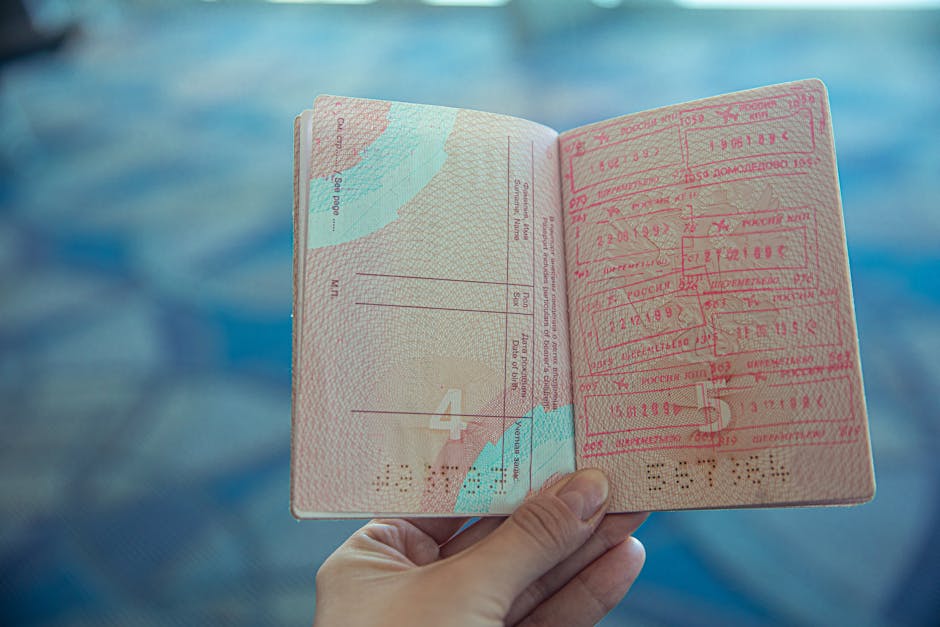
Standard vs. Accelerated Routes by Employment Type
The standard route requires 10 years of continuous residence, including at least 5 years on a work or activity-based visa. That's the baseline. Several accelerated routes exist — and for highly skilled professionals, the difference is substantial.
| Route | Minimum Residency | Key Requirement | Notes |
|---|---|---|---|
| Standard (Work Visa) | 10 years (5+ on work visa) | Stable income, good conduct, language | Applies to most salaried employees |
| Highly Skilled Professional (HSP) — 80+ points | 3 years | Maintain HSP-1 or HSP-2 status; 80+ points on scoring table | Points verified at time of application |
| Highly Skilled Professional — 70+ points | 5 years | 70+ points on scoring table throughout residency | Document scoring consistently over residency period |
| Spouse of Japanese National | 3 years married + 1 year continuous residence in Japan | Valid marriage, cohabitation evidence | Divorce before PR approval terminates this route |
| Business Manager | 5 years | Profitable business, stable personal income | Business financials reviewed alongside personal income |
| Refugee Status | As recognized | Recognition as convention refugee | Separate assessment criteria apply |
Special Circumstances That Shorten Residency Duration
Beyond the HSP route, a few specific situations can reduce the residency requirement. Japanese nationals or former Japanese nationals applying for repatriation have separate provisions. Children born in Japan to long-term PR holders may qualify earlier. Investment-linked pathways exist but remain largely undeveloped compared to other countries' golden visa schemes.
The most practical accelerated route for most working professionals is the Highly Skilled Professional visa. If you're in tech, academia, research, or senior management, it's worth calculating your current HSP score — the Ministry of Justice publishes the scoring table online, and many applicants qualify without realizing it.
Step-by-Step: How to Apply for Japan Permanent Residency in 2026
Gathering Required Documents and Proof of Income
The ISA's official document list is a starting point, not a complete picture. Counter staff regularly request additional documents not listed online. Build your application around these core items:
- Application form for permission for permanent residence (永住許可申請書)
- Reason for application letter (申請理由書) — a written statement explaining your ties to Japan, employment history, and reasons for seeking PR
- Residence Card (在留カード) — current and all previous cards if available
- Passport — current and previous passports showing entry/exit history
- Certificate of residence (住民票 / Juminhyo) — issued at your ward office (区役所), typically takes 5 minutes
- 3 years of tax returns (確定申告書 or 源泉徴収票 / withholding tax slips from employer)
- 3 years of residence tax payment certificates (納税証明書) from your ward office
- Pension payment records (ねんきん定期便 or records from Japan Pension Service)
- NHI or Employees' Health Insurance enrollment records
- Employment certificate (在職証明書) from your employer — current employer only
- Recent pay slips — typically last 3 months
- JLPT certificate or equivalent language proficiency documentation
- Two recent passport-sized photos
Self-employed applicants also need 3 years of business financial statements, a business registration certificate (登記簿謄本), and may be asked for client contracts or invoices as proof of ongoing business activity.
Submitting Your Application to Immigration Services
Applications are submitted in person at your regional Immigration Services Bureau (出入国在留管理局). Tokyo applicants use the Tokyo Regional Immigration Services Bureau in Shinagawa. Osaka applicants use the Osaka Regional Immigration Services Bureau in Temmabashi. There are 8 regional bureaus across Japan, plus branch offices.
Bring originals and copies of every document. Staff will check originals and return them — bring a full copy set to leave with the office. Take a number at the PR application counter specifically; this is a separate queue from visa renewals at most bureaus.
The application fee is currently ¥10,000, payable by revenue stamp (収入印紙 / Shunyu Inshi), which you buy at post offices or from vending machines inside immigration buildings. Under FY2026 changes, this fee is expected to exceed ¥100,000 — confirm the current amount before your visit, as this change may already be in effect depending on when you're applying.
What to Expect During the Review Period
Standard processing time is 4–6 months. Some applications take up to 8 months. There's no fast-track option for PR review — no premium processing, no way to check queue position. You'll receive a postcard when a decision has been made.
During the review period, your current visa remains valid. If your visa expires before a decision is reached, you need to renew it — PR applications do not pause your visa clock. Keep all tax, insurance, and compliance obligations current during this period. The ISA can and does conduct compliance checks after submission.
If approved, you'll be issued a new Residence Card showing "Permanent Resident" (永住者) status. If rejected, the notification letter typically does not specify the reason. Most applicants in this situation consult an immigration attorney before reapplying.
Common Questions
What are the 3 statutory requirements for Japan permanent residency 2026?
The three statutory requirements under Article 22 are: good conduct (素行善良要件), financial self-sufficiency (独立生計要件), and alignment with Japan's national interest (国益適合要件). All three must be met. Good conduct covers criminal history and tax/insurance compliance. Self-sufficiency means stable income around ¥3.5 million annually for single applicants. National interest covers residency duration, language ability, and visa compliance history.
What is the minimum income requirement for Japan permanent residency?
The ISA doesn't publish a single mandatory figure, but the practical counter-level standard is approximately ¥3.5 million per year for a single applicant. Add roughly ¥200,000 per dependent. Consistency matters as much as the amount — three consecutive years of stable income at this level carries more weight than one high-earning year.
How long do you need to live in Japan before applying for permanent residency?
The standard requirement is 10 years of continuous residence, including at least 5 years on a work or qualifying activity-based visa. The Highly Skilled Professional route reduces this to 3 years (80+ points) or 5 years (70+ points). Spouses of Japanese nationals can apply after 3 years of marriage plus 1 year continuous residence in Japan.
What documents do I need for Japan PR application 2026?
Core documents include: completed application form, 申請理由書 (letter of reason), current and past Residence Cards, passport, Juminhyo, 3 years of tax records, 3 years of residence tax payment certificates, pension and health insurance records, employment certificate, 3 months of pay slips, JLPT or equivalent language certificate, and two passport photos. Self-employed applicants also need business financials and a corporate registration certificate. Bring originals and a full copy set.
Can I get Japan permanent residency after 5 years instead of 10?
Yes, under the Highly Skilled Professional visa with 70+ points on the government's scoring table, 5 years of residency is sufficient. With 80+ points, it drops to 3 years. Business Manager visa holders can also apply after 5 years. Outside these categories, 10 years remains the standard requirement.
What changed in Japan's permanent residency rules in 2026?
Four significant changes: standardized Japanese language testing replaced discretionary assessment, the new 5-year visa requirement takes effect from April 2027, application fees are increasing from ¥10,000 to over ¥100,000 during FY2026, and tax/social insurance compliance cross-checking has been tightened with PR revocation now possible for willful non-payment under the amended Immigration Control Act.
Do I need Japanese language proficiency for permanent residency?
Yes, as of 2026. The new requirement mandates proof through standardized testing — a JLPT certificate (N3 or above is the widely cited minimum threshold) or equivalent. The previous system of informal discretionary assessment by officers has been discontinued. If you don't currently hold a qualifying certificate, the JLPT runs twice a year in July and December.
What is the processing time for Japan PR approval?
Expect 4–6 months from submission. Some applications take up to 8 months, particularly if additional documentation is requested. There's no expedited processing available. Your current visa status remains valid during the review period, but you'll need to renew that visa separately if it expires before a decision is reached.
Can self-employed foreigners apply for Japan permanent residency?
Yes. Self-employed applicants typically hold a Business Manager visa (経営・管理) and can apply for PR after 5 years. Income assessment covers both personal earnings and business financials. Expect to submit 3 years of business financial statements, a corporate registration certificate, and potentially client contracts or invoices. Business profitability and continuity are weighed as part of the self-sufficiency requirement.
What happens if my PR application is rejected in 2026?
You can reapply. There's no mandatory waiting period, but rejection notices typically don't specify the reason — which makes fixing the problem difficult without professional guidance. Common rejection factors include insufficient income documentation, gaps in tax or insurance records, residence history inconsistencies, and now language proficiency gaps. Consult a registered immigration attorney (行政書士) before reapplying to identify the likely cause.
Bottom Line
If you're eligible to apply for Japan PR in 2026, apply before April 2027 to avoid the 5-year visa requirement if you're not already on one. Get your JLPT documentation ready now — that's the requirement most likely to catch applicants off guard this year. And verify the current application fee before you go to the counter, because the increase from ¥10,000 to over ¥100,000 may already be in effect depending on your timing.
Information accurate as of 2026. Requirements and fees change — verify current details with the Immigration Services Agency official website or a registered immigration attorney before taking action.
Post a Comment